
Recruitment of Office Assistants (Multipurpose)
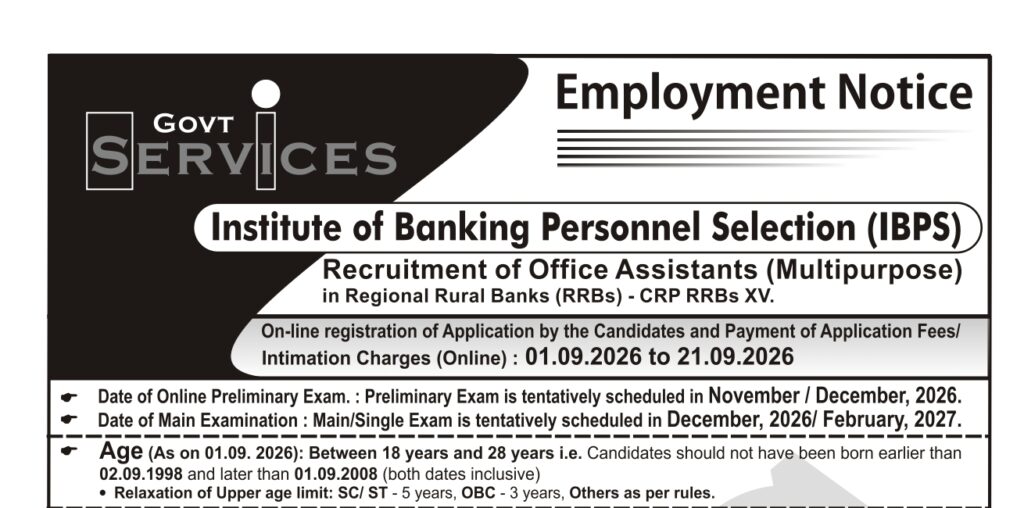
Recruitment of Office Assistants (Multipurpose) In Regional Rural Banks (RRB’s) – CRP RRB XV conducted by the Institute of Banking Personnel Selection (IBPS) On-line registration including Edit/Modification of Application by candidates and Payment of Application Fees (only Online): 01.09.2026 to 21.09.2026 Date of Online Preliminary Exam.: Preliminary Exam is tentatively scheduled for November / December 2026. Date of Online Main Exam. : Main Exam is tentatively scheduled for December 2026 / February 2027 HOW TO APPLY Candidates can apply online only from 01.09.2026 to 21.09.2026 and no other mode of application will be accepted• .- Pre-Requisites for Applying Online Before applying online, candidates should scan their : -left thumb impression (If a candidate does not have a left thumb, he/she may use his/ her right thumb. If both thumbs are missing, the impression of one of the fingers of the left hand starting from the forefinger should be taken. If there are no fingers on the left hand, the impression of one of the fingers of the right hand starting from the forefinger should be taken. Ifnofingers are available, the impression of the left toe may be taken. In all such cases where the left thumb impression is not uploaded, the candidate should specify in the uploaded document the name of the finger and the specification of the left/right hand or toe). – a handwritten declaration (text given below). The handwritten declaration has to be in the candidate’s handwriting and in English only. If it is written by anybody else and uploaded in any other language, the application will be considered as invalid. (In the case of candidates who cannot write, may get the text of the declaration typed and put their left-hand thumb impression (if not able to sign also) below the typed declaration and upload the document as per specifications.) (Name of the candidate), hereby declare that all the information submitted by me in the application form is correct, true, and valid. I will present the supporting documents as and when required. “
Recruitment of OFFICERS-Scale 1 (Assistant Manager)
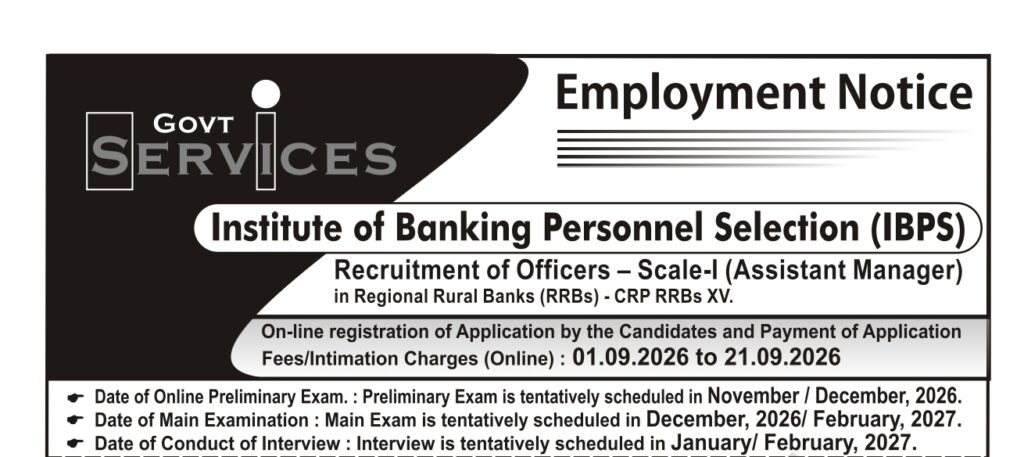
Recruitment of OFFICERS -Scale 1 (Assistant Manager) In Regional Rural Banks (RRB’s) – CRP RRB XV conducted by the Institute of Banking Personnel Selection (IBPS) On-line registration including Edit/Modification of Application by candidates and Payment of Application Fees (only Online): 01.09.2026 to 21.09.2026 Date of Online Preliminary Exam.: Preliminary Exam is tentatively scheduled for November / December 2026. Date of Online Main Exam. : Main Exam is tentatively scheduled for December 2026 / February 2027 HOW TO APPLY Candidates can apply online only from 01.09.2026 to 21.09.2026 and no other mode of application will be accepted• .- Pre-Requisites for Applying Online Before applying online, candidates should scan their : -left thumb impression (If a candidate does not have a left thumb, he/she may use his/ her right thumb. If both thumbs are missing, the impression of one of the fingers of the left hand starting from the forefinger should be taken. If there are no fingers on the left hand, the impression of one of the fingers of the right hand starting from the forefinger should be taken. Ifnofingers are available, the impression of the left toe may be taken. In all such cases where the left thumb impression is not uploaded, the candidate should specify in the uploaded document the name of the finger and the specification of the left/right hand or toe). – a handwritten declaration (text given below). The handwritten declaration has to be in the candidate’s handwriting and in English only. If it is written by anybody else and uploaded in any other language, the application will be considered as invalid. (In the case of candidates who cannot write, may get the text of the declaration typed and put their left-hand thumb impression (if not able to sign also) below the typed declaration and upload the document as per specifications.) (Name of the candidate), hereby declare that all the information submitted by me in the application form is correct, true, and valid. I will present the supporting documents as and when required. “
RESERVATION QUOTAS IN THE RECRUITMENT POLICY
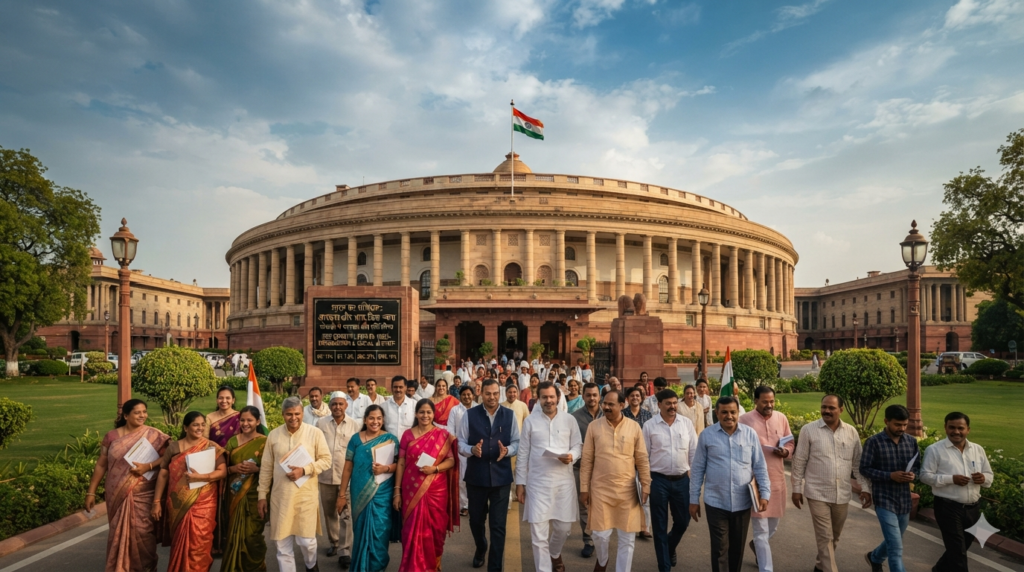
RESERVATION QUOTAS IN THE RECRUITMENT POLICY OF THE GOVT. IN INDIA An insightful article on “Reservation quotas in the recruitment policy of the Govt. of India” has been authored by Mr.Tapan Kumar Das, who is associated with MIES Institute for Last 5 Years as a Skill Development Officer. It is only India’s recruitment policy mandatory fixed percentages of reservation in govt. jobs and educational institutions for specifically identified groups like SC, ST, and OBC & Other Backward classes being it an ideally modeled country of diversities. MIES Institute is a renowned coaching centre for Govt. Job exams in West Bengal. Thousands of students appeared in Govt. service exam from MIES every year and got Government service maximum of them. MIES is the most popular institute among Government Job aspirants because of their specialty in School Service, WBCS, PSC, SSC, BANK, RAIL, Primary and Upper Primary TET etc exams. Students are giving huge number of Class Test, Model Test, and Mock Test and also Practice huge number of Online Test through MIES App in their course curriculum. MIES is a pioneer institute of West Bengal Civil Service coaching in West Bengal. 1. INTRODUCTION TO THE RESERVATION QUOTAS IN THE RECRUITMENT POLICY OF THE GOVT. IN INDIA Recruitment Policy in Indian Government Services is a structured framework designed to ensure fair, transparent and merit-based hiring to fill public sector positions. It emphasizes impartiality, adherence to constitutional provisions such as Reservation Quotas and filling roles through standardized methods like competitive examinations and interviewer conducted by Independent Bodies. 2. KEY ASPECTS OF RECRUITMENT POLICY IN INDIA. a) Constitutional Methods. There are governed by Article 309 of the Indian constitution, which, in the absence of legislative action empowers the Precedent or Governors to create temporary rules for public service employments. b) Merit-Based and Independent Aims to hire skilled talent through impartial agencies like Union Public service commission (UPSC) for Central Services & state public service commissions (SPSCs) for state roles. c) Reservation & Social Justice. Government incorporates mandatory reservations for scheduled casts (SC), Scheduled Tribes (ST), other backward classes (OBC) and economically weaker Sections (EWS) to ensure equitable representation. d) Transparency and uniformity. Government follows strict, predetermined Recruitment Rules (RR) for every position, outlining qualifications, age limits & selection methods. 3. PRIMARY METHODS OF RECRUITMENT a) Direct Recruitment: The most common methods involving open competitive examination e.g. Civil Service Exam and interviews conducted by commissions. b) Promotion: This is the way of filling higher posts/positions by promoting qualified employees from lower ranks, ensuring a career progression ladder. c) Deputation / Transfer. These transferring personnel from other government Departments, State Governments or Autonomous Bodies for a temporary period. d) Special Selection / Lateral Entry This relates to recruiting specialized talent from the private sector or academia for specific high-level positions, through this is less frequent than traditional methods. 4. Govt. Tribal quota details are as follows Thetribal quota (for scheduled Tribes or STs in Govt. of India jobs is 7.5%. This fixed percentage reservations as significantly lower than their overall share of the country’s population, as STs make up about 8.6% of India’s total population (according to 2011 census) Alike Tribal quota STs are also allowed standard 7.5% quota in all open competition/ direct recruitment across national civil services and central educational institutions. In case of promotion to STs are entitled to this 7.5% quota/ reservation in jobs. =Why the difference is there in term of Tribal quota and the STs Quota.? The 7.5% reservation was originally calculated based on early population when the constitution of India was drafted. Despite the Tribal population, growing to over 8.6% of the nation’s total demographics and Supreme Court copping total reservations across all categories at 50%, the national STs job quota has remained at 7.5%. = Age relaxation in recruitment rules/ policy in the govt. jobs Age relaxation is a policy that allows specific groups (SC/ST, OBC or PWD) to apply for govt. or corporate jobs beyond the standard upper-age limit. It adds extra to promote equal opportunity and account for systemic or historical disadvantages usually minimum & maximum age limit for unreserved category is 18 to 27 years. But in few exams like Bank PO, RRB NTPC etc the maximum age limit is 30 to 33 years. Govt. of West Bengal had already been announced 5 years extension of maximum age limit for any Govt. job exams conducted under State Govt. However the standard age relaxation rules are usually cumulative. For example, in govt. jobs exams- such as OBC candidate get + 3 years, SC/ST get + 5 years and PWD applicants get + 10 years added to the base maximum age. 5. KEY RECRUITMENT BODIES a) UPSC (Union Public Service Commission) It handles recruitment for Group-A and some Group-B (non gazette) and Group-C for posts in Ministries and Departments. b) SSC (Staff Selection Commission) It handles recruitment for Group B (non-gazette) and Group-C for posts in Ministers / Departments. c) State PSCs It conducts recruitment for State-level civil services. 6. EVEN AFTER 79 YEARS OF THE COUNTRY’S FREEDOM (IN 1947), THE RESERVATION QUOTAS LIKE SC, ST, OBC & EWS IN REGARD TO EMPLOYMENT / RECRUITMENT POLICY OF THE GOVERNMENT, SHOULD IT REMAIN MANDATORY INEVITABLE. The Indian Govt. thinks that Reservation quotas policy is still relevant in India as it has been functioning as a system of affirmative action to ensure social justice, equality, and representation. They are designed to address historical injustices, cast-based exclusion and social disadvantages by reserving a specific percentage of seats and posts in public employment. This system of employment or recruitment rules & policies cannot be ignored due to complexities, diversities, variances that still exist in Indian Social System, historically, from since evolving its civilization. 7. AS OF 2026, THE PRESENT STAGE & SITUATION OF THE GOVERNMENT RECRUITMENT FRAMEWORK. The government as has justified and honored the constitutional mandate as the recruitment policy is legally mandated under Articles 15 (4) and 16 (4) of the Indian constitution, allowing special
ROLE & IMPORTANCE OF YOGA IN THE PRESENT WORLD
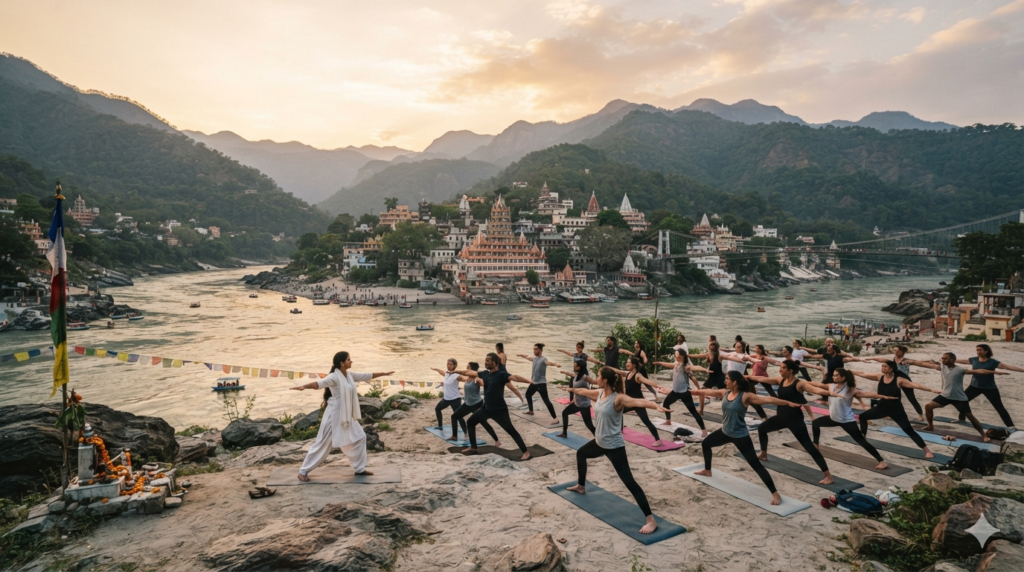
ROLE & IMPORTANCE OF YOGA IN THE PRESENT WORLD An insightful article on “Roll & Importance of YOGA in the present world” has been authored by Mr.Tapan Kumar Das, who is associated with MIES Institute for Last 5 Years as a Skill Development Officer. Yoga is an ancient practice originating in India that combines physical postures, breathing exercises, meditation, and disciplined living. In the modern world, where people face increasing stress, sedentary lifestyles, and lifestyle-related health problems, yoga has become an important means of maintaining physical, mental, and emotional well-being. Yoga is not merely a form of physical exercise; it is a holistic approach to well-being. Its emphasis on physical fitness, breathing, concentration, and mindfulness makes it particularly relevant to modern society. Regular and appropriate practice of yoga, combined with a balanced diet, adequate sleep, and necessary medical care, can contribute significantly to a healthier and more balanced life. MIES Institute is a renowned coaching centre for Govt. Job exams in West Bengal. Thousands of students appeared in Govt. service exam from MIES every year and got Government service maximum of them. MIES is the most popular institute among Government Job aspirants because of their specialty in School Service, WBCS, PSC, SSC, BANK, RAIL, Primary and Upper Primary TET etc exams. Students are giving huge number of Class Test, Model Test, and Mock Test and also Practice huge number of Online Test through MIES App in their course curriculum. MIES is a pioneer institute of West Bengal Civil Service coaching in West Bengal. INTRODUCTION OF ROLE & IMPORTANCE OF YOGA IN THE PRESENT WORLD Yoga means to join or unite, referring to the harmonization of body, mind and spirit to achieve liberation. Its genesis traces back over 5000 years to the Indus-Saraswati Civilization in Ancient India. Born form the inner inquiries of the sages, the system evolved through the Vedas, Upanishads and patanjali’s Yoga Sutras. 2. ORIGIN OF THE LINGUISTIC MEANING, GENESIS & EVOLUTION OF YOGA The word ‘Yoga’ stems from the Sanskrit root ’Yuj’ which means “to Yoke”, “to join” or “to uniting of individual consciousness” with the universal consciousness, bringing harmony to person’s physical and mental states. The first written mentions of yoga appear in the Rig Veda, the oldest sacred Texts of India-Ancient priests used songs and mantras to chanel cosmic energy. In the Upanishadic period sages internalized the early rituals into philosophical inquiry, focusing on self-knowledge and wisdom, as highlighted in the Bhagavad Gita . Sage like patanjali codified the practice into the famous eight-limbed path (Ahastanga) in the Yoga Sutras, providing a systematic approach to meditation, morals and physical discipline. Thereafter starting in the late 19th centuries, masters brought Yoga to the west, evolving it into the globally recognized blend of physical postures (asanas), breath work & meditation. 3. IS YOGA A SCIENCE ? Yes, Yoga is a science as it is considered a subtle internal or inner Science and an experimental methodology focused an systematic self-observation, lifestyle harmony and the realization of unity within human consciousness. = It is related to modern fields like neuroscience, anatomy & psychology which functions as an inner science of human energy & perception & achieves the deep integration of mind & body. = Yoga as a science, it operates as a systematic technology using precise methods like postures, breath & meditation as tested through direct internal observation rather than external lab instruments. = It also aligns with movement mechanics, musculoskeletal aligment & isometric conditioning what is known as Anatomy & physiology. = Yoga postures and breathing affect organs, blood flow & the nervous system. It also explores mental habits, emotional regulation and stress relief through meditation. It also measures mindfulness and meditation change brain structure and activity. = Yoga does the integration of mind & body & spirit. Yoga by its step-by-step practices can test and observe result in the human body & mind. Yoga is of empirical nature as the ancient and modern practitioners use direct inner experience rather than blunt belief. Yoga brings harmony to physical health and emotional stability & work as one whole system. Yoga is one whole system to integrate human body, mind and soul spirits, as well as bring mental relief and calmness through its meditation techniques & process. It also makes humans sharper and keen in self observation & self introspection to ensure sustainance of inner peace & mental stability. 4. THE PHILOSOPHY OF YOGA At is core, Yoga is not just excuse, but a path to overcome suffering, balance the senses and reach self-reflection or ‘noksha’. Many modern practiceoners and historians view Yoga as a deeply transformative, holistic way of life rather than just a physical routine. From its earliest beginnings, Yoga was seen not as a technique but as complete way of life-a practical system for living with awareness, balance and purpose, both internally and in the world. The aim of yoga is self-realization, to overcome all limits of sufferings leading to the “state of liberation”. 5. HOW YOGA HAS BEEN GLOBALLY RECOGNIZED BY THE UNO & POPULARIZED, AND EMBRACED WORLDWIDE. Yoga’s global recognition means the ancient Indian disciplined as a universal, non-religious practice for physical fitness, mental clarity, and holistic wellness. It represents a shift from localized spiritual tradition to an internationally recognized tool for combating lifestyle diseases and stress. 6. YOGA’S MILESTONE OF GLOBAL RECOGNITION. = United Nations proclamation. Following a proposal by India, the United Nations declared June 21 as the International Day of Yoga in 2014, with a record 175 member states endorsing the resolution. = UNESCO inscribed Yoga on the Representative list of its intangible Cultural Heritage of Humanity in 2016. = The World Health Organization (WHO) advocates for Yoga as a primary preventive measure against sedentary lifestyles and non-communicable diseases. 7. CULTURAL AND PRACTICAL IMPACT OF YOGA. Today modern Yoga transcends borders allowing people of all ages, cultures and fitness levels to harmonize their mind
RECRUITMENT OF JUNIOR ASSOCIATES IN SBI
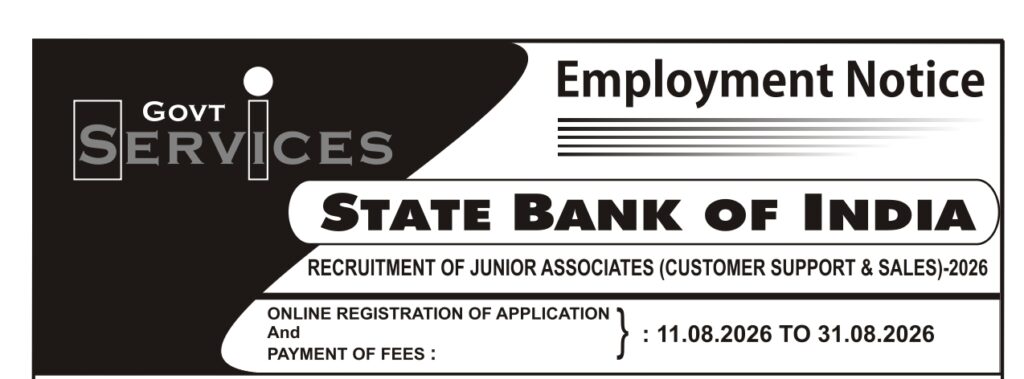
RECRUITMENT OF JUNIOR ASSOCIATES IN SBI (CUSTOMER SUPPORT & SALES).2026STATE BANK OF INDIA ONLINE REGISTRATION OF APPUCATION And PAYMENT OF FEES : : 11.08.2026 TO 31.08.2026preliminary Examination will conducted tentatively in the month of 2026.Main Examination will be conducted tentatively in the month of November 2026.AGE (As on 01.04.2026): Not below 20 years and not above 28 years as on 01.04.2026, i.e. candidates must have been born not earlier than 02.04.1998 and not later than 01.04.2006 (both days inclusive).Relaxation of Upper age limit: SC/ ST – 5 years, OBC – 3 years, Others as per rules.ESSENTIAL ACADEMIC QUALIFICATIONS (AS on 31.12.2026): Graduation in any discipline from a University or any equivalent qualification recognized as such by Central Government Candidates having dual degree ODD) certificate should ensure that the date of passing the IDD is on or before 31.12.2026.Those who are in the final year/ semester of their graduation may also apply provisionally subject to the condition that, if provisionally selected, they will have to produce proof of having passed the graduation examination on or before 31.12.2026. APPLICATION FEE AND INTIMATION CHARGE: (NON-REFUNDABLE) :Sl. Category Fee/ intimation Cha1. SC/ ST,’ PWD/ XS/DXS NIL2. General/ OBC/ EWS Rs.750 SELECTION PROCEDURE: : The selection process will consist of on-line test (Preliminary & Main exam) and test Of Specified opted local language
WEST BENGAL CO-OPERATIVE SERVICE COMMISSION
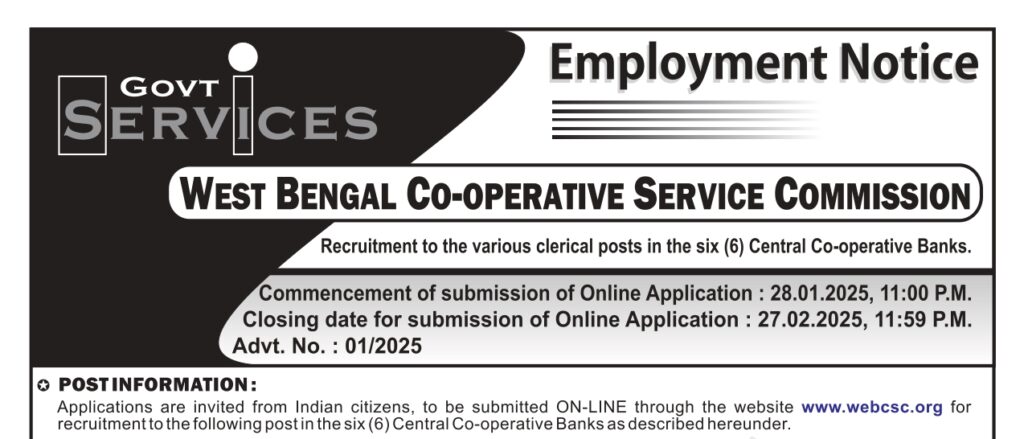
Recruitment in Central Co-operative Banks conducted by the West Bengal Co-operative Service Commission Recruitment to the various clerical posts in the six (6) Central Co-operative Banks conducted by the West Bengal Co-operative Service Commission. Commencement of submission of Online Application: 28.01.2025, 11:00 P.M. Closing date for submission of Online Application: 27.02.2025, 11:59 P..M. Advt. No. : 01/2025 POST INFORMATION: Applications are invited from Indian citizens, to be submitted online through the website www.webcsc.org for recruitment to the following post in the six (6) Central Co-operative Banks. As per the requirements of those Institutions, the candidates must have proficiency in reading, writing, and speaking Bengali to appear for the examination. N.B: Selection of OBC (B) category candidates shall abide by the final result and outcome of the Special Leave petition pending before the Hon’ble Apex Court SELECTION PROCEDURE: Tota l marks of 100 in the examination will be as follows, upon which the final merit list will be prepared: On-line CBT: Full Marks-85 Interview: FullMarks-15. 1. Stage-1: Candidates will have to appear for an ONLINE EXAMINATION named On-Line CBT (Computer Based Test), which will consist of85 a number MCQ type questions comprising of five subjects namely- There will be a negative marking mark against each incorrect answer. Full Marks: 85; Duration-2 hours. Stage I: Candidates will be called for a Descriptive Written Test (DWT) in a ratio of 1:10. On marks obtained in online CBT (Computer Test) and for Interview/ Viva-voce in a ratio of 1:6 based on the performance in the DWT. 2. Stage ll: Candidates will have to appear for the Descriptive Written Test (DWT) (Full Marks 50 and qualifying in nature). As per the merit list prepared based on the result of the CBT and have to secure 30% marks in the Descriptive Written Test (i.e. 15 or above) to be considered for the next stage of the interview. The marks obtained in the Descriptive Written Test will not be reckoned for preparing the final merit list after the interview. 3. Stage lll: The candidates from the CBT merit list; numbering 10 times vacant posts as per their order of merit in the CBT Merit List or the total number ofthe candidates in the CBT merit list, whichever is lower, will be called for the Descriptive Written Test for total marks of 50. The candidates who will not be able to secure 30% marks on 50 i.e. 15, will be disqualified for the interview. From the merit list of the rest of the passed candidates in the Descriptive Written Test, candidates numbering 6 times the vacant posts as per their order of merit in the Descriptive Written Test Merit List or the total number of the rest of the passed candidates in the Descriptive Written Test Merit List whichever is lower will be called for an interview APPLY NOW
SERIOUS ENVIRONMENTAL ISSUES

AN INTELLIGIBLE FOCUS ON THE SERIOUS ENVIRONMENTAL ISSUES An article on” An Intelligible focus on the serious environmental issues including public health risks on this planet” has been written by Subho Ghosh, faculty cum note developer of MIES Group, and edited by Mr. Tapan Kumar Das, who is associated with MIES Institute for last 5 years as a Skill Development Officer. He has extensive experience in teaching WBCS, SSC, PSC, RAIL, Bank, School Service, Primary TET, Upper Primary TET, etc exams. Mr. S Ghosh and Mr. T K Das both are very grateful to MIES Management for giving them a chance as faculty cum note developers and also additional job responsibility to Mr. Tapan Kr Das as a Skill Development Officer at MIES Institute which is one of the best competitive coaching centers in West Bengal. In His opinion, MIES Institute is one of the top competitive exam institutes in West Bengal. AN INTELLIGIBLE FOCUS ON SERIOUS ENVIRONMENTAL ISSUES INCLUDING PUBLIC HEALTH RISKS ON THIS PLANET. MIES is a renowned coaching center for Govt. Job exams in West Bengal. Thousands of students appeared in Govt. service exam from MIES every year and got Government service maximum of them. MIES is the most popular institute among Government Job aspirants because of its specialty in School Service, WBCS, PSC, SSC, BANK, RAIL, Primary, and Upper Primary TET, etc exams. Students are given a huge number of Class Tests, Model Tests, and Mock Tests and also Practice a huge number of Online Tests through MIES APP in their course curriculum. MIES is a pioneer institute of West Bengal Civil Service coaching in West Bengal. As per the student’s version, MIES is the Best Training Academy for Govt. Job exam in West Bengal. Environmental problems or issues are the set of challenges and problems that are seriously affecting the living environment and public health all over the world. Climate change and pollution to overpopulation and energy consumption are the main issues that have turned out to be very complex being interconnected. The main serious environmental issues consist of the following: (1) Air pollution (2) Water Pollution (3) Solid waste (4) Radioactive waste (5) Greenhouse effect & global warming (6) Ozone Depletion in the Stratosphere (7) Deforestation Now let these be discussed methodically which are the most serious environmental issues & concerns to the existence of the entire living world. 1. AIR POLLUTION: Air Pollution is contamination of the indoor or outdoor environment by any chemical, physical, or biological agent that modifies the natural characteristics of the atmosphere. Moreover, Household combustion devices, motor vehicles, industrial facilities & forest fires are common sources of air pollution. Simply speaking, it is the contamination of air by harmful gases, dust & smoke which affects plants, animals & humans drastically. Nevertheless, there is a certain percentage of gases present in the atmosphere, and an increase or decrease in the composition of these gases is harmful to survival. Causes of air pollution: Air pollution is caused by solid and liquid particles and certain gases are suspended in the air. The particles & gases can come from cars, trucks, exhaust, factories, dust, pollen, mold spores, volcanoes, and wildfires. NASA explains that air pollution is caused by vehicle emissions, fuel oils & natural gas to heat homes, by-products of manufacturing and power generation, particularly coal-fueled power plants, and fumes from chemical production which are called primary sources of human-made air pollution. The main sources of pollutants to air pollution are : Smoke stacks – from Thermal power plant Particulate matter from plant Carbon Monoxide, Lead (Pb) & Nitric Oxide (No) from Automobiles (like Car) Authorities/Agencies engaged to limit Air Pollution in India: At present, the active participate – authorities/agencies that are vigilant in limiting the emission of air pollutants in India. (a) The Central Pollution Control Board (CPCB) (b) Convention on Environment on a Long-range Transboundary Air Pollution (CLRTAP) (c) National Clean Air Programme (NCAP) WHO’s Report on Environmental Pollution in India : According to WHO’s report on Air Pollution in India estimated that about 1.2 million people die each year. The number is further staggering when monetized is that the economic loss to India as regards prevention & control of environmental pollution is estimated at 150 million dollars per year. Who also report that Asthma and lung cancer from Environmental Pollution say Air Pollution even affects children before they are born. The five top most and tough affected countries or the most polluted countries in the world are Nepal, Bangladesh, Bahrain, Pakistan & India due to Air Pollution & other pollution as per the Air Pollution Index 2020. 2. WATER POLLUTION: How water Pollution impacts environmental pollution: Environmental Pollution As regards Water Pollution, it stands out that water pollution is caused majorly by Domestic Sewage, Industrial Effluents, pollutants like pesticides, nitrates, petroleum products, etc. BOD’s (Biological Oxygen Demand) measurement: BOD’s measurement focuses on water pollution is also seriously impacting & helping increase the environmental pollution level in developing countries or many countries of the world. BOD level means Oxygen consumption by micro-organisms when they decompose organic matter in craters. BOD can kill aquatic life: It is the key indicator of water quality and the degree of organic pollution level can lead to rapid depletion of Oxygen in water, which can kill multifarious aquatic lives like fishes & other related lives of this sort. Algal Bloom/Algae Bloom: This is another type of pollutant or nutrient whose presence in water causes the growth of planktonic which deteriorates water quality & helps increase fish mortality rate. Water toxicant: This means an increase of toxicity in water which accumulates and concentrates toxic substances in the water causing water pollution which is called Bio-magnification. The accumulated and toxic substances or toxic organisms cannot be metabolized or exerted & thus passed on to the next higher tropic level. This phenomenon is well-known for mercury & DDT. Another agent/element/cause like Eutrophication which is technically the process of too many plants growing on the
Employment Notice by Railway Recruitment Board
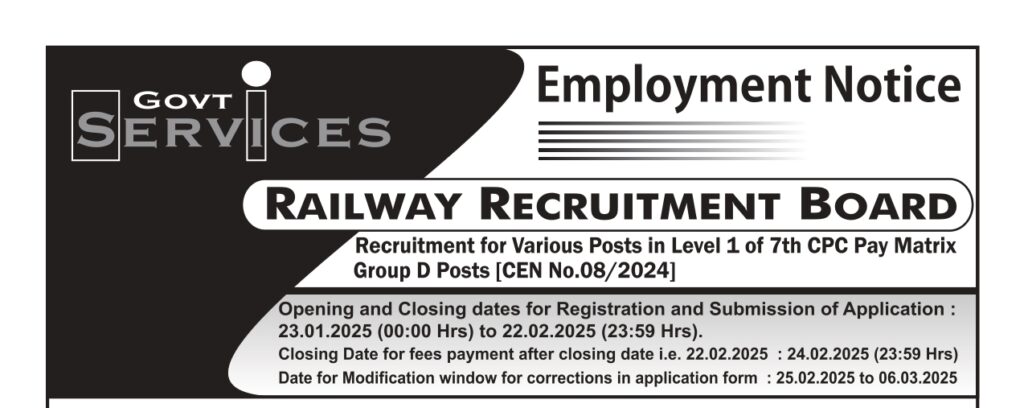
Employment Notice by Railway Recruitment Board for Various Posts in Level 1 of 7th CPC Pay Matrix Group D Employment Notice by Railway Recruitment Board for Various Posts in Level 1 of 7th CPC Pay Matrix Group D Posts [CEN No.08/2024). Opening and Closing dates for Registration and Submission of Application: 23.01.2025 (00:00 Hrs) to 22.02.2025 (23:59 Hrs). Closing Date for fee payment after closing date i.e. 22.02.2025 : 24.02.2025 (23:59 Hrs) Date for Modification window for corrections in an application form: 25.02.2025 to 06.03.2025 POST DETAILS AT A GLANCE: The summary of various posts is furnished below for reference. Further, the parameters (Qualification, Medical standard, and Suitability of the post for PwBD, etc.) of various posts included in the CEN are in AnnexureA and the Railway and post-wise vacancy for all the notified posts is in Annexure B. However, the Railway reserves the right to revise these vacancies in part or full 0 ESSENTIAL EDUCATIONAL QUALIFICATIONS: Diploma I Degree in Engineering will not be accepted instead of Course Completed Act Apprentices/ITl for the post of Level-1 unless otherwise specified. Graduate Act Apprentice will not be accepted in place of Course Completed Act Apprenticeship(CCAA)… Candidates should have passed 10th (Matriculation) or ITI or equivalent or National Apprenticeship Certificate (NAC) granted by NCVT as on the closing date for ONLINE Registration. Those awaiting results of their final examination of the prescribed minimum educational/technical qualification SHOULD NOT apply. Modes of Payment of Fee : Closing Date and Time of Fee Payment: Online payment will be allowed till 23.59 hrs. of 24.02.2025, for candidates who register successfully till 23:59 hrs. of 22.02.2025. inclusion, if any, received till the closing date for ONLINE registration of application for this CEN. The examination fee paid by the candidates whose application is incomplete or those who have not submitted their application or whose application is rejected, will not be refunded HOW TO APPLY: More details: + Candidate Photograph (against a plain white background): JPEG image of size 50 KB to 100 KB. + Candidate Signature: JPEG image of size 30 KB to 50 KB. + Scribe Photo(wherever applicable) : JPEG image of size 50 KB to 100 KB. For more details please go through the original notification Application link: www.rrbkolkata .gov.in or https://www.rrbapply.gov.in/ APPLY NOW
DEMOCRATIC EDUCATION IS AN INSTRUMENT
DEMOCRATIC EDUCATION IS AN INSTRUMENT Mr. Tapan Kumar Das has been associated with MIES Institute for the last 5 years as a Skill Development Officer who conceived this awesome write-up DEMOCRATIC EDUCATION IS AN INSTRUMENT. He has extensive experience in teaching WBCS, SSC, PSC, RAIL, Bank, School Service, Primary TET, Upper Primary TET, etc exams. He is very grateful to MIES Management for giving him a chance as a Skill Development Officer at MIES Institute which is one of the best competitive coaching centres in West Bengal. In His opinion, MIES Institute is one of the top competitive exam institutes in West Bengal. MIES is a renowned coaching center for Govt. Job exams in West Bengal. Thousands of students appeared in Govt. service exam from MIES every year and got Government service maximum of them. MIES is the most popular institute among Government Job aspirants because of its specialty in School Service, WBCS, PSC, SSC, BANK, RAIL, Primary, and Upper Primary TET, etc exams. Students are given a huge number of Class Tests, Model Tests, and Mock Tests and also Practice a huge number of Online Tests through MIES APP in their course curriculum. MIES is a pioneer institute of West Bengal Civil Service coaching in West Bengal. As per the students’ version, MIES is the Best Training Academy for Govt. Job exam in West Bengal. DEMOCRATIC EDUCATION IS INSTRUMENTAL FOR PROGRESSION OF THE SOCIETY AND THE NATION. Men can become men only by true education idealists emphasize the total development of a man’s personality in and Through a specially selected social environment which would impel him to draw out the best powers and to nurture them for the realization of his intellectual, social, moral and spiritual self. Mahatma Gandhi rightly defined education as “the all-round drawing out of the best in child and man-body, mind and spirit.” A modern man needs faith in the power of man held by the early Greeks. Sophocles expressed this faith in the heroic race through the Theban Elders in Antigone. “Of all the wonders beneath the Sun The most wonderful is man He weareth Earth unweariedly He hath taught himself speech And wind-swift Thought. Of the ages in history, man felt that he was “a little lower than the angels.” This faith in one’s power and respect for other’s power gives birth to the concept of Democracy which has earned such popularity as an ideology and also as an implementation that modern thinkers cannot but reflect on any aspect of human life as the principle of democracy. Literal Meaning of Democracy Uses of Democracy in different contexts – DEMOCRATIC EDUCATION IS AN INSTRUMENT Modern man, philosophers, and politicians have taken Democracy as the very way of living, under the purview of which comes the social, political, religious, moral, and economic aspects of life. In this type of social environment, everyone is to develop himself fully obviously without interfering in the development of others. The individual and society thus come closer to each other and stand in perfect harmony, keeping in view the interests of both –the individual and the group. John Dearey has defined democracy as more than a form of government. It is primarily a mode of essential living conjoint communicated experience. The most salient feature of Democracy is the equal rights of everyone in thought and action and sharing experiences. The utterance of equality, fraternity, and liberty, which pierced the air during the French Revolution constitutes the lifeblood of Democracy. The Preamble of the Indian Constitution – DEMOCRATIC EDUCATION IS AN INSTRUMENT The Preamble to the constitution of India propagates the same message and deals with true democracy such as “WE, THE PEOPLE OF INDIA, having solemnly resolved to constitute India into a SOVEREIGN SOCIALIST SECULAR DEMOCRATIC REPUBLIC and to secure to all its citizens: JUSTICE, social, economic and political; LIBERTY of thought, expression, belief, faith and worship; EQUALITY of status and of opportunity; FRATERNITY assuring the dignity of the individual and the unity and integrity of the Nation;” This deal facilitates the progress of both the individual and the society. This deal facilitates the progress of both the individual and the society. DEMOCRATISING THE INDIAN SOCIETY We are here concerned with the discussion of Education for Democracy. We should make one thing clear to make education an instrument for democratizing society, education itself must have the principles of democracy. The whole education program should breathe a spirit of democracy. So we should now consider a few basic principles of democracy in the texture of education. BRIEFLY FOCUSING THE PRINCIPLES OF DEMOCRACY. Spirit of Democratic education ensures freedom for every individual. Freedom is the basic need of the human soul. Nothing good enters into the human world except in and through the free activities of individual men & women. So education must be tinged with the spirit of freedom such as freedom in thought, action and movement which means not the freedom, whatever one wishes to do with his emotion & sentiment of whimsical impulse, but whatever one does, must be a ___________ action not affecting any pain or loss to another person\s. Tolerance: The democratic ideal is harbored best in an atmosphere of tolerance. Everyone is from his sphere but Everyone must have a feeling of tolerance for other’s views, thoughts & actions. The present state of restlessness all over the world is the outcome of a lack of such tolerance. So democratic education system shapes individual students’ quality of tolerance. Co-operation: Democracy or democratic education teaches cooperation between man & man, Man & Woman, and woman & woman which means all individuals of a society or a nation must have the spirit of cooperation with each other in doing deeds and duties, become prosperity and progress in human socially rest on cooperation. Democracy and educational aim The educational process and its aim should be directed to democracy. All should keep in mind that democracy is not an extreme force; this is a way of life. So Education
RECRUITMENT OF JUNIOR ASSOCIATES (CUSTOMER SUPPORT & SALES)
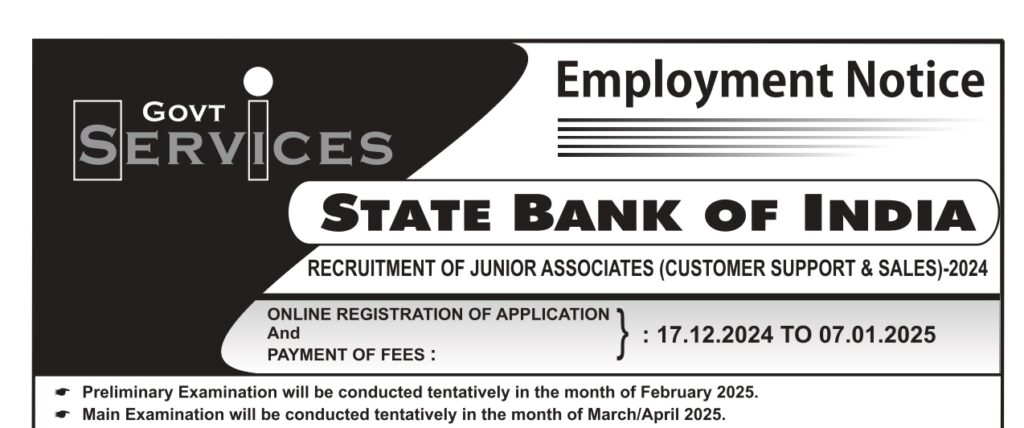
RECRUITMENT OF JUNIOR ASSOCIATES RECRUITMENT OF JUNIOR ASSOCIATES (CUSTOMER SUPPORT & SALES) for State Bank of India ONLINE REGISTRATION OF APPLICATION } And PAYMENT OF FEES : 17.12.2024 TO 07.01.2025 A preliminary Examination will be conducted tentatively in February 2025. The main Examination will be conducted tentatively in March / April 2025. AGE (As of 01.04.2024): Not below 20 years and not above 28 years as of 01.04.2024,i.e. candidates must have been born not earlier than 02.04.1996 and not later than 01.04.2004 (both days inclusive). > Relaxation of upper age limit: SC/ ST – 5 years, OBC – 3 years, and others as per rules. ESSENTIAL ACADEMIC QUALIFICATIONS (As of 31.12.2024): Graduation in any discipline from a recognized University or any equivalent qualification recognized as such by the Central Government. Candidates having integrated dual degree (IDD) certificates should ensure that the date of passing the IDD is on or before 31.12.2024. > Those who are in the final year/ semester of their graduation may also apply provisionally subject to the condition that, if provisionally selected, they will have to produce proof of having passed the graduation examination on or before 31.12.2024. HOW TO APPLY: Candidates can apply online and no other mode of application will be accepted. Candidates will be required to register themselves online through the Bank’s website https://bank .sbi/web/careers/current-openings OR https://www.sbi.eo.in/web/careers/current-openings-Recruitment of Junior Associates 2024… After registration candidates are required to pay the requisite application fee through online mode by using debit card/ credit card/ Internet Banking. Helpdesk: In case of any problem in filling up the form, payment of feel intimation charges, or receipt of Admission/call letter, queries may be made at telephone no. 022-22820427 (between 11:00 AM and 05:00 PM on working days) or lodge his/her query on http://cgrs.ibps.in. Candidates are advised not to forget to mention ‘Recruitment of Junior Associate-2024’ in the subject of the email. Pre-requisites for Applying Online: kept active in the declaration of results. It will help him/ her in getting call letters/pieces of advice etc. by email/ SMS. b. The text of the hand-written declarations is as follows: “I, (Name of the candidate), Date of Birth … hereby declare that all the information submitted by me in the application form is correct, true, and valid. I will present the supporting documents as and when required. The signature, photograph,h and left thumb impression is of mine”. c. Left Thumb Impression: If a candidate does not have a left thumb, they may use his /her right thumb for applying) d. Candidates to visit the Bank’s web site https://bank.sb i/careers/ Current- openings or https://www.sbi.co.in/careers/Current-openi ngs and open the appropriate Online Application Form, available under Recruitment of JuniorAssociates. Apply g. Fee can be paid by using debit card/ credit card/ Internet Banking by providing information as asked on the screen. Transaction charges for online payment, if any, will be borne by the candidates.